Talofa Lava & Welcome
About Us
Effective from 1 July 2026, the former Ministry of Women, Community and Social Development was realigned into institutions with clearer and more specialised responsibilities
The MINISTRY OF FAMILY AND SOCIAL AFFAIRS – MATAGALUEGA o AIGA ma AGAFESOOTA’I now leads national policy, prevention, safeguarding, inclusion and coordinated action for Samoa’s people and families.
Vision
“Every person and family healthy safe, included and thriving.”
The future Ministry of Family and Social Affairs where every person is valued every family is supported and no one is left behind.
Mission
“To lead inclusive policies and co-ordinate action that support families and improve wellbeing.”
This is concise, clear and easier for staff, partners and the public to remember.
Core Principles
- Inclusivity: Ensuring equal access to opportunities and resources for all community members.
- Human Rights: Upholding the dignity and respect of all individuals by ensuring access to essential services.
- Service: Delivering high-quality, impartial public services to the people of Samoa.
- Partnership: Collaborating with stakeholders to address complex challenges and achieve sustainable outcomes.
- Leadership: Empowering communities to drive development initiatives while maintaining accountability.
- Accountability: Ensuring transparency and responsibility in decision-making and service delivery.
- Professionalism: Ensure that service to the public and within the Ministry are provided in an absolute professional manner.
Overview
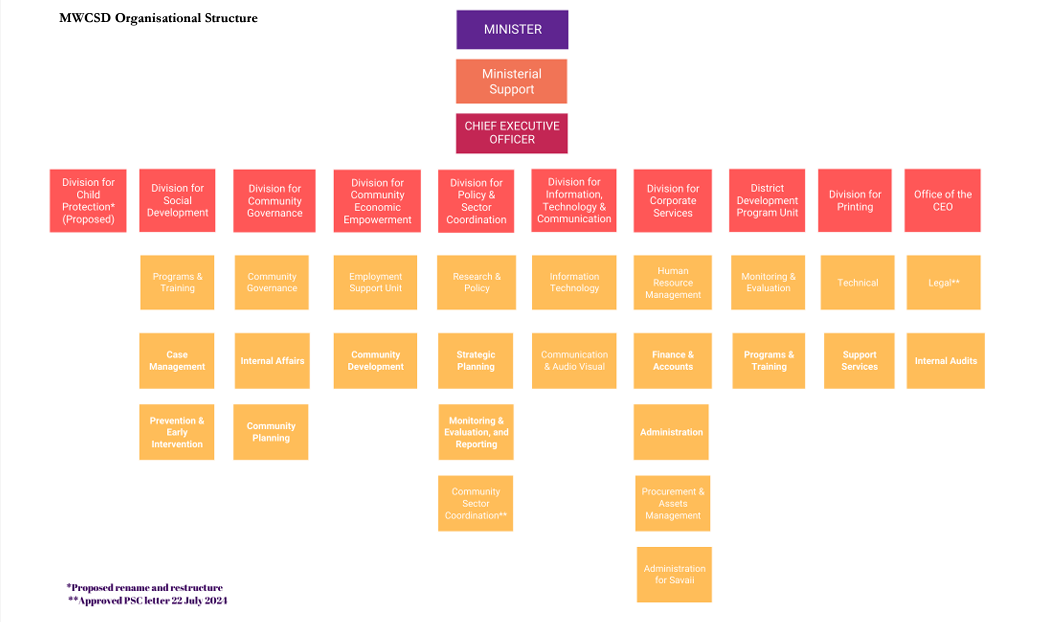
The Ministry of Family and Social Affairs (the Ministry) operates under a comprehensive governance framework designed to support efficient and effective service delivery across its key functional areas. The current organizational structure, endorsed by the Public Service Commission and approved by Cabinet in July 2026, is designed to enhance coordination, accountability, and strategic alignment with the Ministry’s objectives. The structure ensures that each division within the Ministry operates cohesively, facilitating a collaborative approach toward achieving community-led development.
Organisational Structure
The Ministry is organized into several key divisions, each responsible for specific strategic functions:
- Women, Men and Gender Equality Division: Oversees the implementation of social welfare programs that target vulnerable populations, including women, youth, and persons with disabilities. This division is central to promoting inclusive social outcomes.
- Children, Youth and Family Division: Promotes initiatives that enhance the economic independence and participation of marginalized groups, particularly women and youth. Programs under this division focus on economic empowerment through capacity building, training, and entrepreneurship support.
- Sector Coordination and Community Engagement Division: Ensures effective governance at the district and village levels by coordinating with village representatives, district councils, and Sui o Nuu/Sui Tamaitai. This division plays a critical role in promoting community leadership, local governance, and grassroots development.
- Policy, Planning and Sector Coordination Division: Responsible for the development, coordination, and monitoring of sector-wide policies that drive social development. This division plays a key role in ensuring that all initiatives align with national and international development priorities.
- Communication, and Information, Communications Technology (ICT) Division: Manages the Ministry’s digital infrastructure, communications, and information systems. This division ensures that the Ministry remains agile and responsive through effective use of technology.
- Corporate Services Division: Provides essential administrative, financial, and human resource support, ensuring that all divisions operate smoothly and efficiently.
- Child Protection Division (Proposed): Focuses on safeguarding children’s rights and well-being through targeted policies, programs, and advocacy initiatives. This division is integral to advancing child protection measures in line with international conventions.
Additionally, the structure includes:
- • Office of the CEO: Positioned to provide independent oversight and legal guidance, ensuring transparency and compliance with relevant laws and regulations.